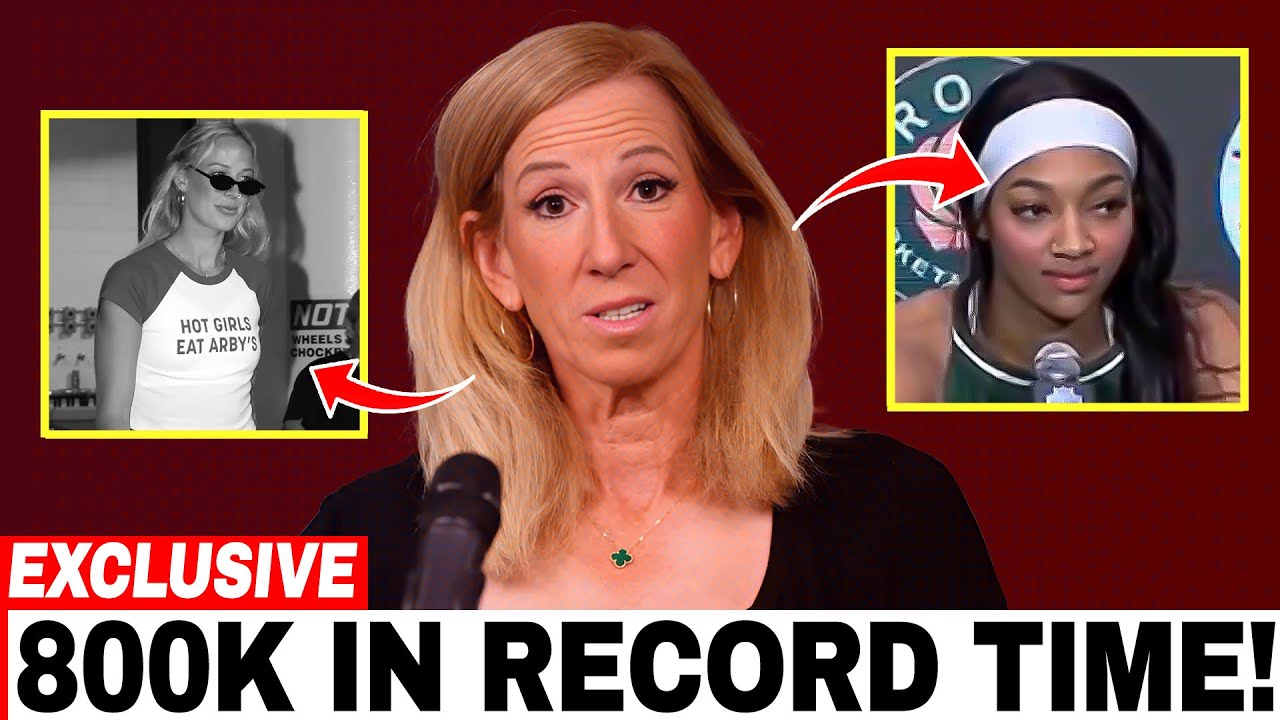
It wasn’t a buzzer-beater, a crossover, or a logo three-pointer that shook the foundations of the WNBA this week. It was a t-shirt. Specifically, a simple tee emblazoned with the phrase “Hot Girls Eat Arby’s.” When Indiana Fever guard Sophie Cunningham walked into the arena wearing it, she didn’t just make a fashion statement; she triggered a seismic shift in the power dynamic between professional athletes and the leagues that try to control them.

The WNBA thought they were solving a problem when they slapped Cunningham with a $5,000 fine for publicly criticizing officials. Instead, they walked directly into a trap. By the time the dust settled, Cunningham had reportedly moved 800,000 units of merchandise, rumors of a multi-million dollar endorsement deal were swirling, and the league was left scrambling to understand how a disciplinary action turned into the most profitable marketing campaign of the year—none of which put a dime in the WNBA’s pockets.
The Spark: A Referee’s Silence
To understand the explosion, you have to look at the fuse. The controversy began during a physical matchup against the Connecticut Sun. Cunningham, known for her grit and energy off the bench, took a hit to the head followed by a grab to the neck. These were not ambiguous plays; they were clear, dangerous fouls caught on multiple camera angles. Yet, the whistles remained silent.
The frustration reached a boiling point not just because of the non-calls, but because of the disrespect that followed. When Cunningham and her superstar teammate Caitlin Clark approached the referee to discuss the physical play, the official physically turned his back, refusing to even acknowledge them. It was a moment of dismissal that any employee in any industry would recognize: the feeling of being silenced by someone in power who simply doesn’t care.
A YouTube thumbnail with maxres quality
The TikTok That Went Nuclear
Most players would have swallowed the anger, fearing the repercussions of speaking out. Cunningham did the opposite. She took to TikTok, posting a video that roasted the officiating crew with the kind of unfiltered honesty that fans crave but rarely get. She called them “slow, useless, and blind.”
The video didn’t just go viral; it resonated. It racked up over 1.3 million views because it validated what millions of fans had been screaming at their televisions for months. The WNBA, facing a PR nightmare, reverted to the corporate playbook: punish the dissenter. They issued the $5,000 fine, intending to make an example of her. The message was clear: criticizing the product will cost you.
The “Streisand Effect” in Real Time
In the age of social media, trying to silence someone often hands them a megaphone. This is known as the Streisand Effect, and the WNBA received a brutal lesson in it. Cunningham didn’t apologize. She didn’t retreat. She “laughed” at the fine and executed what she called “Project B.”
Walking into the next game wearing the viral “Hot Girls Eat Arby’s” shirt was a masterstroke of irony. It was fun, it was unexpected, and it was a direct challenge to the league’s authority. The internet exploded. Arby’s social media team jumped in, calling her an “unapologetic queen.”
The numbers that followed are staggering. Reports indicate that in the wake of the controversy, Cunningham’s jersey sales briefly surpassed even those of Caitlin Clark—the most marketable athlete in the sport. Her social media following more than quintupled, jumping from 300,000 to over 1.7 million. Fans weren’t just buying a shirt; they were buying into a narrative of rebellion. They were supporting the player who refused to be bullied by the boss.
Sophie Cunningham sends 4-word ‘hot girl’ message on skin-tight t-shirt in stunning outfit before Indiana Fever game
The League’s Panic and the Future of Player Power
The aftermath has exposed a terrifying reality for WNBA executives: they no longer hold all the cards. Sophie Cunningham proved that a player’s personal brand can be more lucrative and powerful than the league’s machinery. While the WNBA debated banning branded clothing in tunnels to regain control, brands like Arby’s and even Jeanie Buss’s “Women of Wrestling” (WOW) were reportedly lining up with offers.
Jeanie Buss publicly offered Cunningham a spot as an “enforcer” in WOW, recognizing that Sophie had transcended basketball to become a character, a personality, and a symbol. Rumors of a $2 million ad campaign with Arby’s suggest that the $5,000 fine was the best investment Cunningham ever made.
This incident is a warning shot. The old model, where leagues control the messaging and players are expected to be grateful employees, is dying. Players now have direct access to millions of fans. They can generate their own economy. When the WNBA tried to suppress a voice of dissent, they didn’t silence Sophie Cunningham; they inadvertently crowned her the new queen of athlete marketing.
Sophie Cunningham’s “Arby’s Rebellion” isn’t just about fast food or bad refs. It’s about the realization that in the modern sports landscape, authenticity is the ultimate currency. And right now, business is booming.
